
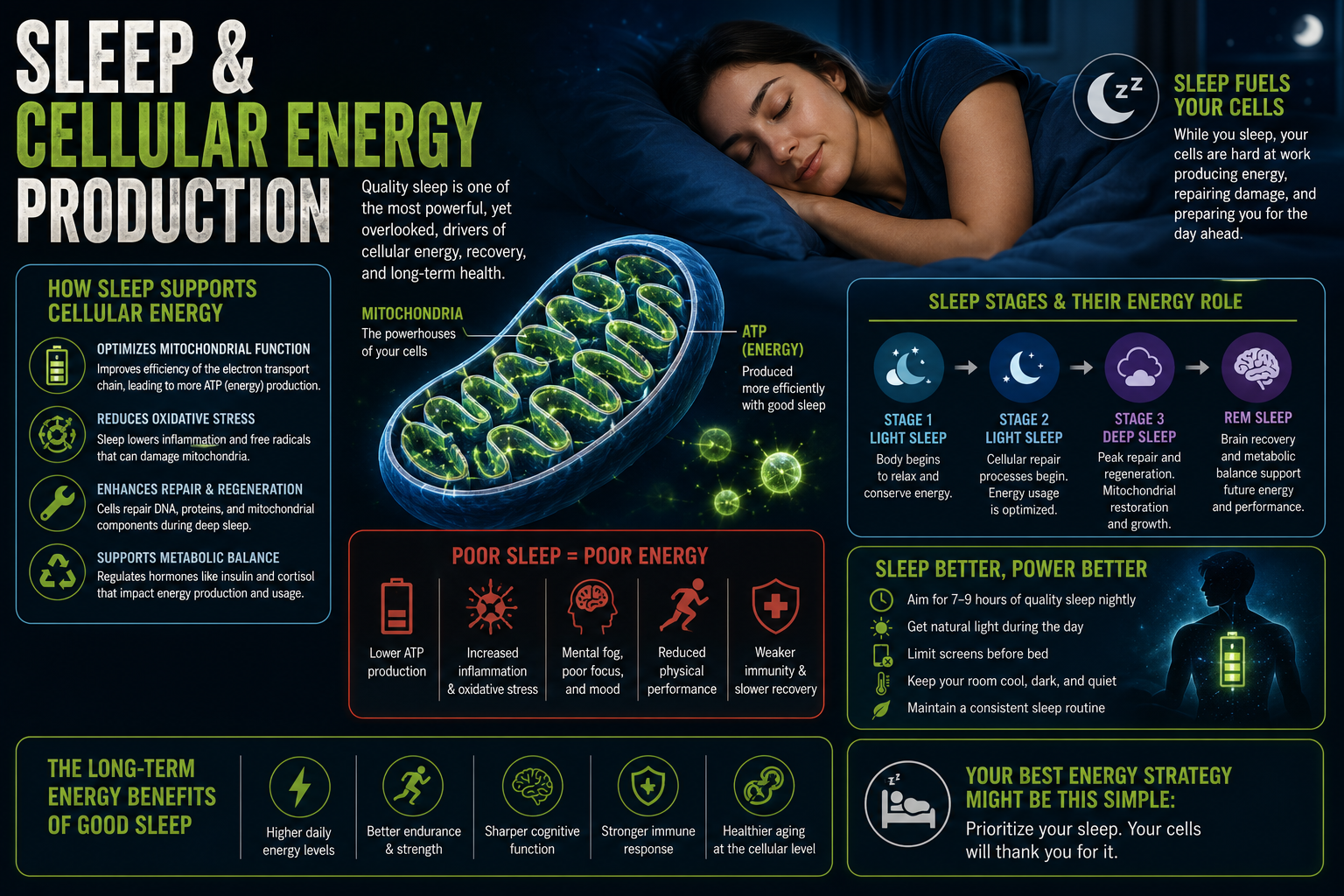
Sleep is when much of your cellular repair work happens, including processes directly tied to mitochondrial health. Skimping on it doesn’t just make you feel tired the next day; it can compound cellular energy problems over time.
What Happens to Mitochondria During Sleep
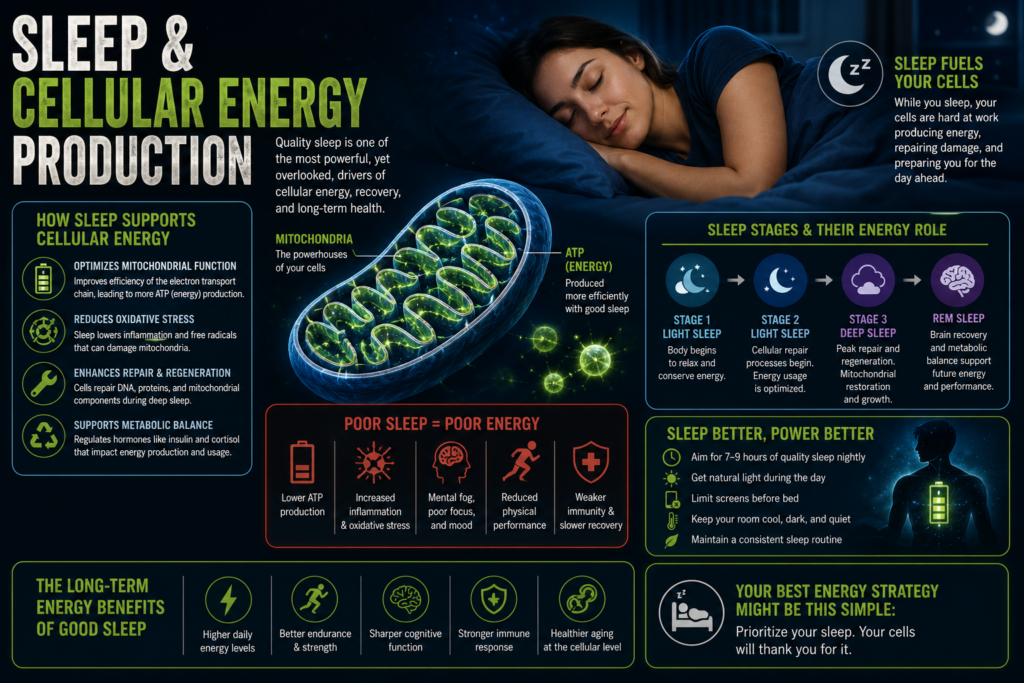
During deep sleep stages, the body ramps up repair processes, including clearing damaged cellular components and supporting mitochondrial turnover. Chronic sleep restriction has been associated with increased oxidative stress and reduced mitochondrial efficiency, essentially compounding fatigue rather than resolving it.
The Cycle of Poor Sleep and Low Energy
Poor sleep reduces cellular energy production, which can make it harder to wind down and fall into quality sleep the next night, particularly when people compensate with excess caffeine or late-day stimulants. Breaking this cycle usually requires addressing sleep directly rather than just pushing through with more coffee.
Supporting Better Sleep
- Consistent sleep and wake times, even on weekends
- Limiting caffeine intake after early afternoon
- Reducing screen exposure in the hour before bed
- Keeping the bedroom cool and dark
If you’ve optimized diet and exercise but energy still isn’t improving, sleep quality is worth a closer look. It’s foundational to how well your cells recharge.
This content is for informational purposes only and is not medical advice.
Leave a Reply