
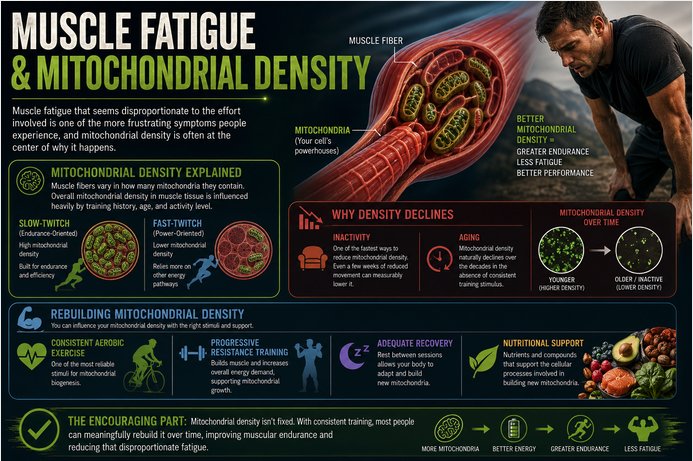
Muscle fatigue that seems disproportionate to the effort involved is one of the more frustrating symptoms people experience, and mitochondrial density is often at the center of why it happens.
Mitochondrial Density Explained
Muscle fibers vary in how many mitochondria they contain. Slow-twitch, endurance-oriented fibers are typically dense with mitochondria, while fast-twitch fibers rely more on other energy pathways. Overall mitochondrial density in muscle tissue is influenced heavily by training history, age, and activity level.
Why Density Declines
Inactivity is one of the fastest ways to reduce mitochondrial density; even a few weeks of reduced movement can measurably lower it. Age plays a role as well, with mitochondrial density naturally declining over the decades in the absence of consistent training stimulus.
Rebuilding Mitochondrial Density
- Consistent aerobic exercise, one of the most reliable stimuli for mitochondrial biogenesis
- Progressive resistance training
- Adequate recovery between sessions to allow adaptation
- Nutritional support for the cellular processes involved in building new mitochondria
The encouraging part is that mitochondrial density isn’t fixed. With consistent training, most people can meaningfully rebuild it over time, improving muscular endurance and reducing that disproportionate fatigue.
This content is for informational purposes only and is not medical advice.
Leave a Reply