
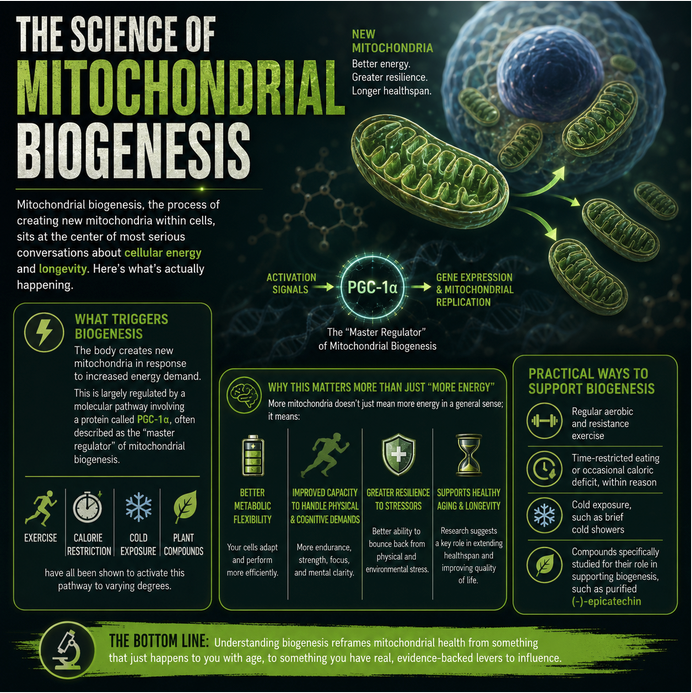
Mitochondrial biogenesis, the process of creating new mitochondria within cells, sits at the center of most serious conversations about cellular energy and longevity. Here’s what’s actually happening.
What Triggers Biogenesis
The body creates new mitochondria in response to increased energy demand. This is largely regulated by a molecular pathway involving a protein called PGC-1α, often described as the “master regulator” of mitochondrial biogenesis. Exercise, calorie restriction, cold exposure, and certain plant compounds have all been shown to activate this pathway to varying degrees.
Why This Matters More Than Just “More Energy”
More mitochondria doesn’t just mean more energy in a general sense; it means better metabolic flexibility, improved capacity to handle physical and cognitive demands, and research suggests it may play a role in healthy aging and longevity more broadly.
Practical Ways to Support the Process
- Regular aerobic and resistance exercise
- Time-restricted eating or occasional caloric deficit, within reason
- Cold exposure, such as brief cold showers
- Compounds specifically studied for their role in supporting biogenesis, such as purified (-)-epicatechin
Understanding biogenesis reframes mitochondrial health from something that just happens to you with age, to something you have real, evidence-backed levers to influence.
This content is for informational purposes only and is not medical advice.